Quick answer: Credit card interest is calculated by converting your APR into a daily rate, applying it to your balance each day, and adding up those daily charges over the billing cycle. If you pay your full statement balance by the due date, you generally pay no interest on purchases thanks to the grace period. Carry a balance, and interest starts compounding daily.
Key takeaways
- Your APR is divided by 365 (or 360) to get a daily periodic rate that’s applied to your balance every day.
- Most issuers use the average daily balance method, so when you pay during the cycle matters.
- Paying your full statement balance each month typically keeps you inside the grace period and interest-free on purchases.
- A penalty APR can raise your rate sharply after a late payment, and cash advances usually have no grace period.
- Knowing the math helps you decide which payoff strategy saves you the most.
Most people know their card has an interest rate, but far fewer know how that rate turns into the dollar amount on a statement. Once you see the mechanics, it gets easier to avoid unnecessary charges and to pay down a balance faster. This guide walks through each piece, then runs a worked example with real numbers.
If you’re already carrying a balance and want a second opinion on your options, you can request a free consultation using the form on this page.
APR: The Starting Point for How Credit Card Interest Works
APR stands for annual percentage rate. It’s the yearly cost of borrowing on your card, expressed as a percentage. Your card agreement and monthly statement list it, and many cards have a variable APR tied to the prime rate, so it can rise or fall over time.
One card can have several APRs at once:
- Purchase APR: applies to everyday spending.
- Balance transfer APR: applies to debt moved from another card, sometimes with a promotional rate.
- Cash advance APR: usually higher than the purchase APR, with interest starting immediately.
- Penalty APR: a higher rate that can be triggered by late payments (more on this below).
Average credit card APRs have been well above 20% in recent years, but your actual rate depends on your card, your credit profile and the issuer. Check your own statement rather than relying on averages.
The Daily Periodic Rate: Where Interest Is Actually Calculated
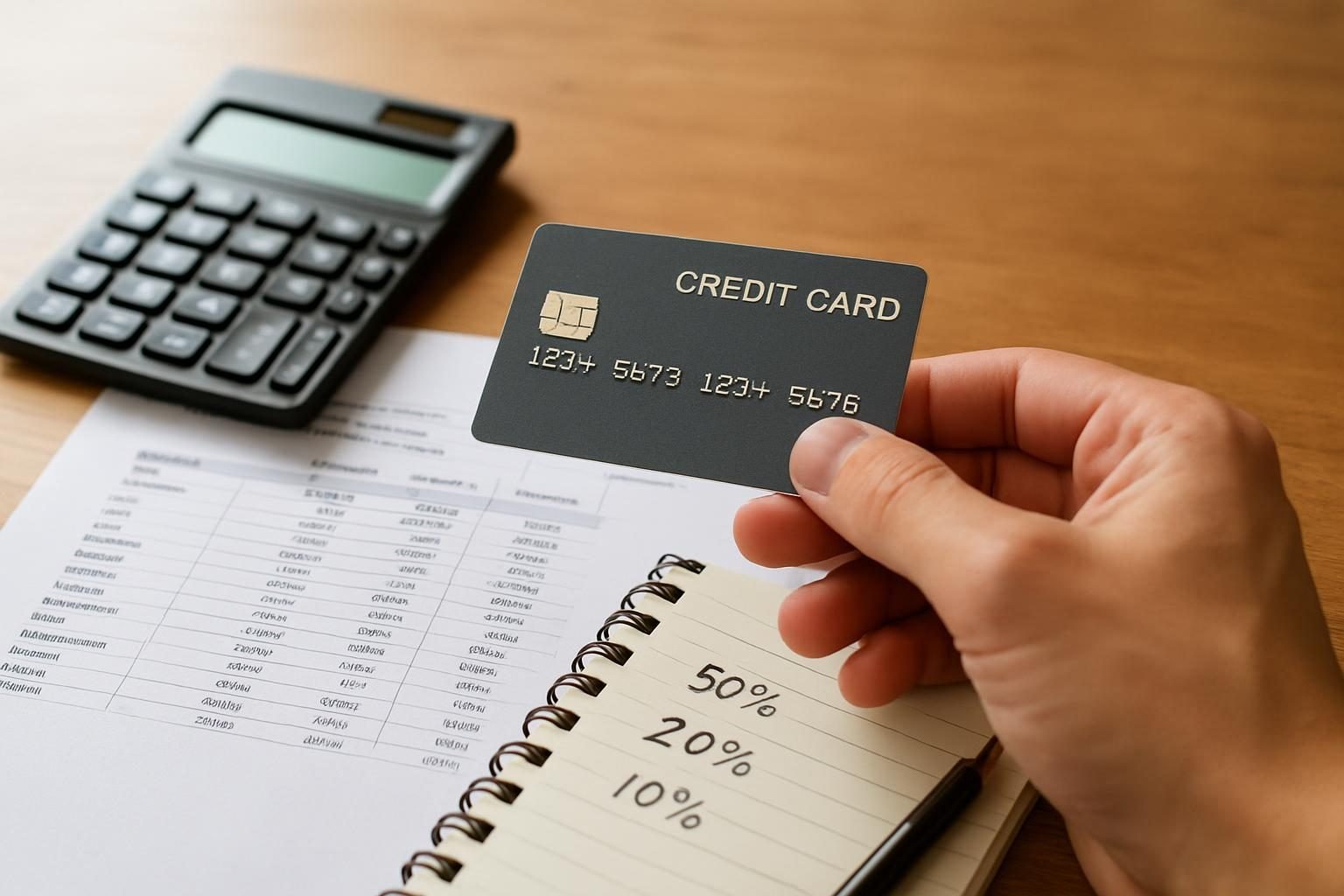
Card issuers don’t charge your APR once a year. They break it into a daily periodic rate and apply it every day you carry a balance.
The formula: Daily periodic rate = APR ÷ 365 (some issuers use 360).
For example, a 24% APR works out to roughly 0.0658% per day (24 ÷ 365). That looks tiny, but it’s applied to your balance 30 or so times per cycle, and each day’s interest can be added to the balance, so tomorrow’s interest is calculated on a slightly larger number. That’s compounding.
Pro tip: Your statement lists your daily periodic rate and the balance subject to interest. Compare those two numbers with your APR to confirm how your issuer calculates charges.
A small daily rate adds up fast when it compounds on a balance you carry for months.
Average Daily Balance: Why Timing of Payments Matters
The most common method issuers use is the average daily balance. Here’s how it works, step by step:
- Record your balance at the end of each day in the billing cycle.
- Add all those daily balances together.
- Divide by the number of days in the cycle to get the average daily balance.
- Multiply by the daily periodic rate, then by the number of days in the cycle.
Because it’s an average, a payment made early in the cycle lowers your balance for more days and reduces interest more than the same payment made on the last day. A new purchase early in the cycle does the opposite.
Some issuers use other methods, such as the adjusted balance or previous balance method. Your cardholder agreement spells out which one applies to you.

The Grace Period: How to Avoid Interest Entirely
The grace period is the window between the end of your billing cycle and your payment due date. Federal rules require that statements be mailed or delivered at least 21 days before the due date, so the window is typically at least 21 days.
Here’s the catch that surprises many cardholders:
- Pay your full statement balance by the due date: you generally owe no interest on new purchases.
- Pay less than the full statement balance: you usually lose the grace period, and interest accrues on the remaining balance and often on new purchases from the day they post.
- Cash advances and many balance transfers: typically have no grace period at all.
Once you lose the grace period, many issuers require paying the full statement balance for one or two consecutive cycles before it’s restored. Check your card terms for the exact rule.
Paying the minimum keeps your account in good standing, but it does not keep interest away.
Penalty APR and Other Fees That Raise the Cost
A penalty APR is a higher interest rate your issuer may apply if you break the terms of your agreement. Under U.S. rules, issuers generally can apply a penalty rate if you’re 60 or more days late on a payment, and must follow notice requirements first. The penalty rate can be significantly higher than your standard APR, and some cards list it near 30%.
Other costs that can stack on top of interest:
- Late fees: capped by federal rules at certain amounts, which can change, so check the current limits.
- Cash advance fees: often a percentage of the amount withdrawn, plus immediate interest.
- Balance transfer fees: commonly a few percent of the transferred amount (an estimate; it varies by card).
The Consumer Financial Protection Bureau publishes plain-language guidance on credit card rules and your rights as a cardholder.
A Worked Example: What a $5,000 Balance Really Costs
Let’s put numbers to it. These figures are estimates for illustration only; your actual charges depend on your card terms.
- Balance: $5,000, with no payments or new purchases during the cycle
- APR: 24%
- Daily periodic rate: 24% ÷ 365 ≈ 0.0658%
- Cycle length: 30 days
Daily interest: $5,000 × 0.000658 ≈ $3.29 per day.
Interest for the cycle: about $3.29 × 30 ≈ $99 (slightly more with daily compounding).
Now suppose the minimum payment is about $150, and roughly $99 of that goes to interest. Only about $51 reduces the principal. That’s why paying only the minimum can keep you in debt for years. Our guide to the minimum payment trap shows how long payoff can really take.
What changes the math in your favor:
- Paying extra early in the cycle lowers your average daily balance.
- Paying more than the minimum shifts more of each payment to principal.
- A lower APR, through a hardship program, negotiation or a promotional transfer, reduces daily interest directly.
You can plug your own numbers into our debt payoff calculator to see a projected timeline.
Practical Ways to Reduce the Interest You Pay
Once you understand the mechanics, you can act on them:
- Pay in full when you can. The grace period makes purchases effectively interest-free.
- Pay earlier and more often. Mid-cycle payments cut your average daily balance.
- Target the highest APR first. This is the logic behind the avalanche method; see debt snowball vs. debt avalanche to compare it with the snowball approach.
- Ask for help with the rate. Some issuers offer temporary lower rates through credit card hardship programs.
- Consider consolidation. A lower-rate loan or transfer card may reduce interest, though fees apply. Compare them in debt consolidation loan vs. balance transfer card.
For a full roadmap, start with our step-by-step plan to get out of credit card debt, or browse the main credit card debt guide. Looking to cut your rate directly? A dedicated article on how to lower your credit card interest rate is on the way.
If interest is eating most of your payments and you’d like to talk through options, you can request a free consultation with the form on this page.
Frequently Asked Questions
How is credit card interest calculated each month?
Your issuer divides your APR by 365 (or 360) to get a daily rate, applies it to your daily balance, and totals the charges over the billing cycle. Most issuers use the average daily balance method, and interest is usually added to your balance, so it compounds.
Do I pay interest if I pay my statement balance in full?
Generally, no, for purchases. If you pay the full statement balance by the due date, the grace period typically means no interest on those purchases. Cash advances and some transfers may still accrue interest right away.
What is a penalty APR and how long does it last?
It’s a higher rate an issuer may apply after serious delinquency, such as a payment 60 or more days late. How long it lasts varies by issuer and rules; under federal rules, issuers must review the account periodically and may need to restore your rate after sustained on-time payments. Check your card agreement.
Does making several payments a month reduce interest?
It can. Because interest is based on your average daily balance, paying earlier or in smaller chunks lowers the balance for more days in the cycle. The savings are modest on small balances but can add up on larger ones.
This article is for general education and is not financial or legal advice. Rates, fees and rules vary by card and can change. Consider speaking with a qualified credit counselor or financial professional about your situation.
See your options for paying down credit card debt
A certified debt specialist will review your options with you, free and with no pressure.