Quick answer: Debt consolidation combines several debts, usually credit cards, into one new loan or account. You use the new money to pay off the old balances, then make a single fixed monthly payment on the new loan. It can simplify your finances and may lower your interest cost, but it does not erase what you owe.
Key takeaways
- Consolidation swaps many payments for one; the total debt stays the same.
- A fixed rate and fixed term give you a clear payoff date.
- Your savings depend on the new interest rate, fees and loan length.
- Running the old cards back up is the biggest risk.
- It is not the right fit for everyone, so compare it with other options.
If you are juggling several credit card payments with different due dates and rates, consolidation can feel like a reset button. It is not quite that, but it can be a useful tool when used carefully. This guide explains how debt consolidation works in plain language, what it changes, and what it does not. If you want a personalized look at your situation, you can request a free consultation using the form on this page.
How Does Debt Consolidation Work? The Basic Steps
The idea is simple: replace many debts with one. Here is the typical process from start to finish.
- List what you owe. Write down each balance, interest rate and minimum payment. Credit cards, store cards and some personal loans are common candidates.
- Apply for a consolidation product. This is often a personal loan, but it can also be a balance transfer card or a home equity loan.
- Get approved and funded. The lender reviews your credit, income and existing debt to set your rate and term.
- Pay off the old debts. Some lenders send the money directly to your creditors. Others deposit it in your account so you can pay them yourself.
- Repay the new loan. You make one fixed payment each month until the loan is paid off.
That is the whole mechanism. You still owe the same total amount, but it now lives in one place under one set of terms.
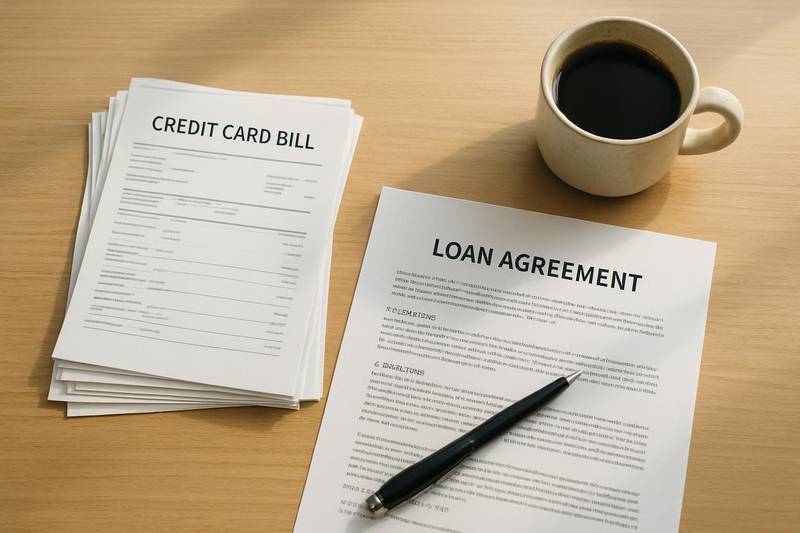
What Changes and What Stays the Same
Understanding this split keeps expectations realistic. Consolidation reshapes your debt; it does not shrink the principal.
What changes
- Number of payments: Five or six due dates become one.
- Interest rate: Your blended rate may go up or down, depending on your credit and the offer.
- Payment structure: Credit cards have flexible minimums. A consolidation loan has a fixed payment and a set end date.
- Type of debt: Revolving card debt becomes an installment loan.
What does not change
- The amount you owe: Borrowing $15,000 to pay off $15,000 still leaves $15,000 of debt, plus any fees and interest.
- Your responsibility to repay: The obligation simply moves to a new lender.
- The habits behind the debt: If spending outpaced income before, it will again unless something shifts.
Pro tip: Compare the total cost, not just the monthly payment. A lower payment stretched over a longer term can cost more in interest overall.
Consolidation changes how you owe the money, not how much you owe.
Common Ways to Consolidate Debt
There is more than one route. Each has trade-offs, and the right choice depends on your credit, income and balances.
- Personal loan: An unsecured installment loan with a fixed rate and term. Terms often run two to seven years. Rates vary widely based on credit.
- Balance transfer credit card: Moves balances to a card with a low or 0% introductory rate for a limited time. Transfer fees (often estimated at 3% to 5%) typically apply, and the rate usually jumps when the promotion ends.
- Home equity loan or HELOC: Uses your home as collateral. Rates can be lower, but you risk your home if you cannot repay.
- Debt management plan (DMP): Offered through nonprofit credit counseling agencies. You make one monthly payment to the agency, which distributes it to creditors, often at reduced rates. This is not a new loan.
For a side-by-side look, see our guide to debt consolidation options compared, and read what a debt management plan is and what it costs if a counselor-led approach appeals to you.
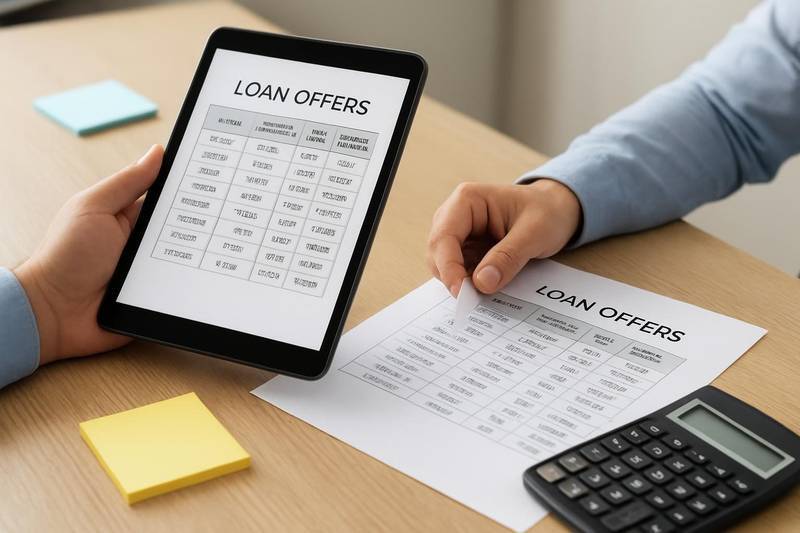
A Simple Example With Estimated Numbers
Numbers make this concrete. The figures below are illustrative estimates only; your actual rates and terms will differ.
- Before: Four credit cards totaling $12,000, with an average rate near 24% APR and combined minimum payments around $360 a month.
- After: One $12,000 personal loan at an estimated 14% APR over 48 months, with a fixed payment of roughly $328 a month.
In this scenario, the lower rate and fixed term could reduce total interest and give you a firm payoff date. If your credit only qualified you for a rate near what your cards already charge, the benefit would shrink or vanish. Origination fees, which some lenders estimate at 1% to 8% of the loan, can also eat into savings.
Before you commit, run the math on the full cost. Our debt consolidation and loans guide walks through what to compare.
A lower monthly payment is not the same as a lower total cost.
The Risks of Consolidating and Running Cards Back Up
The biggest danger is not the loan itself. It is what happens to the paid-off cards afterward.
Once your balances hit zero, those cards have open credit available again. If you start charging on them while still repaying the consolidation loan, you can end up with the loan and new card debt, which is a worse position than where you started.
Other risks to weigh:
- Higher total cost: A long term or fees can outweigh a lower rate.
- Credit impact: Applying triggers a hard inquiry, and a new account can lower your average account age. Paying on time can help over the long run.
- Secured loans: Using home equity puts your property on the line.
- Promo rate traps: Balance transfer cards can revert to high rates if you do not pay the balance in time.
Ways to protect yourself:
- Build a realistic budget before you consolidate. Our budgeting guide for getting out of debt can help.
- Remove saved card numbers from shopping sites and apps.
- Keep cards for emergencies only, or ask whether closing some makes sense for you.
- Start a small emergency fund so a surprise bill does not go on a card.
Is Debt Consolidation Right for You?
Consolidation tends to work best when several conditions line up:
- Your debts are mostly high-interest, unsecured balances like credit cards.
- Your credit is good enough to qualify for a rate meaningfully lower than your current average.
- Your income can reliably cover the new fixed payment.
- You are committed to not adding new balances.
If your debt is very large relative to your income, or you are already behind on payments, other paths may fit better. These include credit counseling, debt settlement or other forms of relief. Learn more in our overview of debt relief options, or compare approaches in credit counseling vs. debt settlement.
Curious how consolidation might affect your score? Our upcoming guide on whether debt consolidation hurts your credit covers it in detail, and using a personal loan for debt consolidation goes deeper on the most common route.
For a trustworthy overview of borrowing and credit basics, the Consumer Financial Protection Bureau offers free consumer resources. Because everyone’s finances differ, consider speaking with a qualified financial professional or nonprofit credit counselor before deciding.
If you would like help comparing your options, you can request a free, no-pressure debt consolidation consultation using the form on this page.
Frequently Asked Questions
Does debt consolidation reduce what I owe?
No. It combines your balances into one loan, but you still owe the full amount plus interest and any fees. Savings come only from a lower rate or lower costs, not from erasing debt.
Can I consolidate debt with a lower credit score?
Sometimes, but you may be offered higher rates, which can reduce or cancel the benefit. A nonprofit debt management plan is another route that does not rely on a new loan approval.
How long does debt consolidation take?
Applying and funding a personal loan can take from a few days to a couple of weeks, depending on the lender. Repaying it typically takes two to seven years, depending on the term you choose.
What happens to my credit cards after I consolidate?
They usually stay open with zero balances unless you close them. Keeping them open can help your credit utilization, but only if you avoid charging them up again.
Run your numbers: our free debt payoff calculator shows your debt-free date and how much interest extra payments save.
See if debt consolidation could work for you
A certified debt specialist will review your options with you, free and with no pressure.