Quick answer: To dispute errors on your credit report, get your free reports, identify the inaccurate item, and file a dispute with the credit bureau (Equifax, Experian or TransUnion) and the company that reported it. Under the Fair Credit Reporting Act (FCRA), the bureau generally has 30 days to investigate and must correct or delete information it cannot verify. If that fails, you can escalate to the Consumer Financial Protection Bureau (CFPB).
Key takeaways
- Disputing errors is free. You never need to pay anyone to file a dispute for you.
- File with both the credit bureau and the data furnisher (the lender or collector) for the strongest case.
- Keep copies of everything and send mail disputes by certified mail with a return receipt.
- Bureaus generally must investigate within 30 days (up to 45 in some situations).
- If the dispute is ignored or mishandled, you can complain to the CFPB or consult a consumer attorney.
Credit report errors are more common than most people expect, and even small ones can raise your interest rates or get you denied for a loan. The good news is that federal law gives you a clear process to fix them. This guide walks through each step, including a sample letter you can adapt.
Not sure whether an error is the real problem, or whether your debts are dragging your score down? You can request a free consultation using the form on this page to talk through your options with no pressure.
Your Dispute Rights Under the FCRA
The Fair Credit Reporting Act is the federal law that governs how credit bureaus collect and report your information. It gives you specific, enforceable rights when something on your report is wrong.
- Right to accurate information: Bureaus must follow reasonable procedures to ensure maximum possible accuracy.
- Right to dispute: You can challenge any item you believe is incomplete or inaccurate, at no cost.
- Right to an investigation: The bureau must investigate, generally within 30 days of receiving your dispute.
- Right to results: You must be told the outcome in writing, and you can get a free updated copy of your report if information changes.
- Right to add a statement: If a dispute isn’t resolved in your favor, you can add a brief consumer statement to your file.
For a plain-language overview, the CFPB’s guide to disputing credit report errors is a reliable government source.
Step 1: Get Your Reports and Find the Errors
You can pull free reports from all three bureaus at AnnualCreditReport.com, the only site authorized by federal law for this purpose. Weekly free access has been available in recent years, so check the site for current availability.
Read each report line by line. Common errors include:
- Accounts that don’t belong to you (possible identity theft or mixed files)
- Wrong balances, credit limits, or payment statuses
- Late payments you actually made on time
- Closed accounts shown as open, or paid collections shown as unpaid
- Duplicate accounts or debts listed more than once
- Old negative items that should have aged off (most stay up to seven years)
Pro tip: Compare all three reports side by side. An error may appear on just one bureau, and each bureau must be disputed separately.
Step 2: Gather Your Documentation
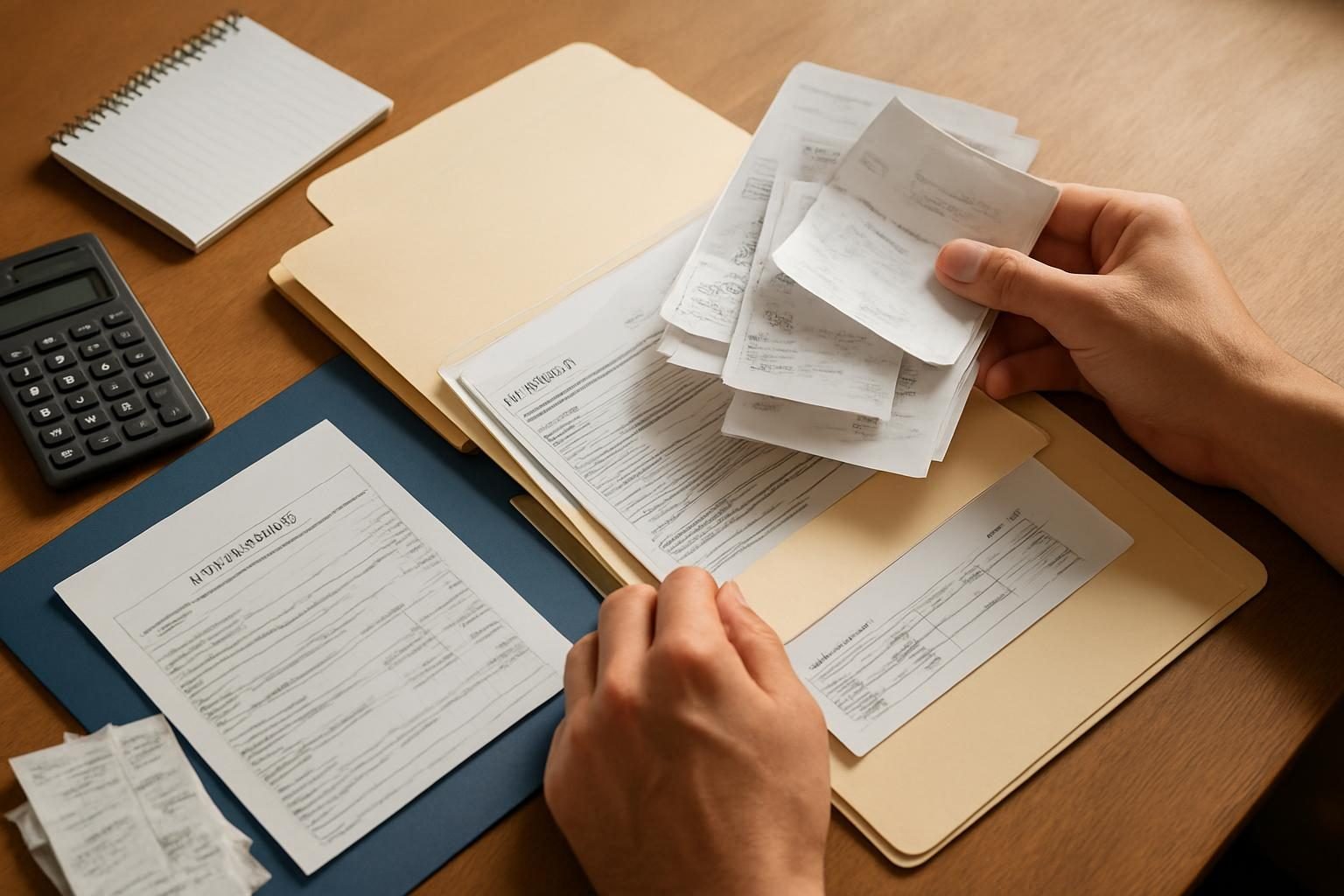
A dispute backed by evidence is far harder to brush aside. Before you file, collect proof that shows the item is wrong.
- Account statements showing the correct balance or payment history
- Proof of payment such as bank records, canceled checks, or confirmation emails
- Paid-in-full or settlement letters from lenders or collectors
- Identity theft documentation, such as an FTC identity theft report, if the account isn’t yours
- A marked-up copy of your report with the disputed items circled or highlighted
Keep originals. Send copies only, and log the date you sent each document.
A dispute with proof attached is far harder for a bureau to ignore than one that simply says “this is wrong.”
Online vs. Mail: How to File a Credit Report Dispute
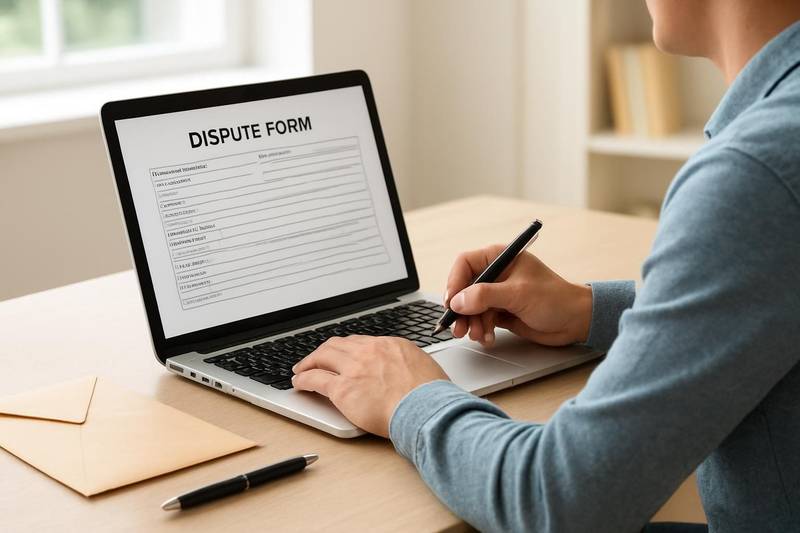
You can dispute with each bureau online, by mail, or sometimes by phone. Each method has tradeoffs.
Disputing online
- Pros: Fast to submit, easy to upload documents, and you can often track status.
- Cons: Online terms of use may limit your options, and it can be harder to prove exactly what you sent.
Disputing by mail
- Pros: Creates a paper trail. Certified mail with a return receipt proves when the bureau received your dispute, which starts the 30-day clock.
- Cons: Slower, and mail and postage costs add up. Certified mail typically runs roughly $4 to $8 per letter with a return receipt (an estimate; check current USPS rates).
Many people file online for speed, then follow up by mail for the paper trail on stubborn items. Find each bureau’s current dispute address and portal on its official website.
Sample Dispute Letter
Adapt this template for each bureau and each item. Keep it factual and brief.
[Your Full Name]
[Your Address]
[City, State ZIP]
[Date][Credit Bureau Name]
Attn: Consumer Disputes
[Bureau Address]Re: Dispute of inaccurate information on my credit report
To Whom It May Concern:
I am writing to dispute the following inaccurate item on my credit report, as permitted under the Fair Credit Reporting Act.
Creditor/Account name: [Name]
Account number: [Last 4 digits or as shown]
Reason for dispute: [Example: This account was paid in full on [date] but is reported with a balance owed.]I have enclosed copies of supporting documents, including [list documents]. Please investigate this item and correct or delete it. Please send me written results of your investigation and an updated copy of my report.
Sincerely,
[Signature]
[Printed Name]Enclosures: [List]
Also send a similar letter to the company that reported the error (the furnisher). Furnishers have their own legal duty to investigate and correct inaccurate reporting.
The 30-Day Timeline: What Happens After You File
- Day 1: The bureau receives your dispute. Note the date from your tracking or receipt.
- Within about 5 business days: The bureau forwards your dispute and documents to the furnisher.
- Within 30 days: The bureau generally must complete its investigation. It can take up to 45 days if you submit additional information during the process or if you dispute based on your free annual report.
- After the investigation: You receive written results. Items that are inaccurate or unverifiable must be corrected or removed.
- After a correction: Request an updated report to confirm the fix actually appears.
Be aware that a bureau may reject a dispute it considers frivolous or a duplicate. Clear details and documents help avoid that.
The 30-day clock starts when the bureau receives your dispute, so keep proof of the date it arrived.
Escalating to the CFPB and Other Options
If the bureau rejects a valid dispute, keeps reporting an error you’ve proven, or ignores you, you have next steps:
- Submit a CFPB complaint at consumerfinance.gov/complaint. The agency forwards it to the company, which generally must respond within 15 days.
- Dispute again with new evidence, or go directly to the furnisher.
- Add a consumer statement to your file explaining your side.
- Contact your state attorney general or consumer protection office.
- Talk to a consumer protection attorney. The FCRA allows you to seek damages in some cases, and some attorneys offer free initial consultations.
If the item is accurate but negative, a dispute generally won’t remove it. In that case, building a payoff plan is often the better path. Our guide on how to fix your credit step by step covers what actually moves your score.
Should You Hire a Credit Repair Company?
You don’t have to. Everything a credit repair company can legally do, you can do yourself for free. Companies typically charge monthly fees, often estimated around $50 to $150 per month, which may not be worth it for simple errors.
- Federal law bars credit repair companies from charging before services are performed.
- Nobody can legally promise to remove accurate negative information.
- Be wary of anyone guaranteeing a specific score increase.
Read more in do credit repair companies work and our credit repair and scores guide. And if collectors are reporting debts you don’t recognize, review your protections in our debt collector rights guide.
If errors are only part of the picture and debt is straining your budget, you can request a free credit repair and debt options consultation with the form on this page. There’s no obligation, and results vary by situation.
Once your report is accurate, keep the momentum going. Our upcoming article on how to remove collections from your credit report and our guide to your credit utilization ratio are natural next reads.
Frequently Asked Questions
How long does a credit report dispute take?
Bureaus generally must finish investigating within 30 days of receiving your dispute, or up to 45 days in certain situations. Mail delays can add time before the clock starts.
Does disputing an error hurt my credit score?
No. Filing a dispute does not lower your score. Fixing a genuine error may help it, though outcomes vary and aren’t guaranteed.
Can I dispute with all three bureaus at once?
Yes, and you should if the error appears on more than one report. Each bureau runs its own investigation, so file separately with each.
What if the error comes back after it was removed?
A furnisher can re-report information only if it follows proper procedures, and the bureau must notify you within five business days if a deleted item is reinstated. If it reappears without notice, dispute again and consider a CFPB complaint.
Get free help with credit repair and debt options
A certified debt specialist will review your situation and options with you, free and with no pressure.