Quick answer: The fastest legitimate way to raise your credit score is to lower your credit card utilization (the share of your limits you’re using) and fix any errors on your credit reports. Both can change your score within one or two billing cycles, though results vary and nothing is guaranteed. Anything that promises a big jump overnight, or that involves hiding or erasing accurate negative information, is a myth or a red flag.
Key takeaways
- Utilization is the quickest lever. Paying card balances down before the statement date can help your score within weeks.
- Errors are worth checking. Wrong balances, accounts that aren’t yours and misreported late payments can be disputed for free.
- Rapid rescore is lender-only. It can speed up score updates during a mortgage application, but you can’t order it yourself.
- Accurate negatives can’t be removed early. Late payments and collections fade with time and good habits, not shortcuts.
If you’re trying to raise your credit score fast because a loan, apartment or refinance is coming up, it helps to know which actions work in weeks and which take months. This guide walks through what actually moves the needle, what to skip, and how to avoid expensive mistakes. If you’d like a second set of eyes on your situation, you can request a free consultation using the form on this page.
How Credit Scores Respond to Changes
Most scoring models weigh a handful of factors. Understanding them tells you where quick wins are likely, and where they aren’t.
- Payment history (largest factor): Slow to change. A late payment can stay on your report for up to seven years.
- Amounts owed / utilization: Can change quickly because it reflects your most recent reported balances.
- Length of credit history: Slow. Keeping old accounts open helps over time.
- New credit and inquiries: Minor, short-term effect from each application.
- Credit mix: Small factor; not worth taking on debt to improve.
That’s why the realistic “fast” strategies focus on utilization and report accuracy. For the full long-term picture, see our step-by-step plan to fix your credit and the Credit Repair & Scores guide.

Lower Your Utilization: The Fastest Lever
Credit utilization is your reported card balances divided by your credit limits. Many lenders and scoring models like to see it under about 30%, and lower is generally better. Because issuers usually report your balance once a month, a drop can show up quickly.
Practical ways to bring it down
- Pay before the statement closes. The balance on your statement date is typically what gets reported, so paying down mid-cycle can lower the number the bureaus see.
- Target the highest-utilization card first. Both per-card and overall utilization can matter, so a single maxed-out card can drag your score.
- Ask for a credit limit increase. A higher limit lowers utilization if your balance stays flat. Ask whether the issuer will use a soft or hard inquiry first.
- Spread balances sensibly. Moving a balance to a card with more available room can help, but watch for transfer fees (commonly estimated at 3%-5% of the amount moved).
- Don’t close old cards to “clean up.” Closing reduces your total available credit and can raise utilization.
Pro tip: If you can’t pay a card down to zero, pay it down below your target percentage before the statement date, then pay the remainder by the due date to avoid interest.
If balances are too high to pay down quickly, a structured plan helps. Try our debt payoff calculator and read how to get out of credit card debt. For a deeper look at the ratio itself, see our upcoming guide to the credit utilization ratio.
Utilization is the one score factor you can often improve in a single billing cycle.
Dispute Errors on Your Credit Reports
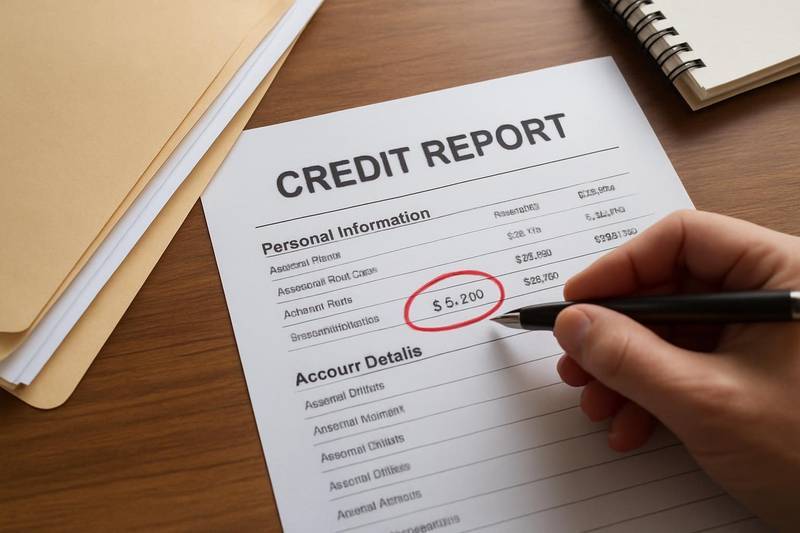
Mistakes happen, and they can quietly hold your score down. You’re entitled to free reports from each of the three bureaus through AnnualCreditReport.com, the official source authorized by federal law.
What to look for
- Accounts you don’t recognize (possible identity theft)
- Late payments that you made on time
- Incorrect balances or credit limits
- Duplicate collection accounts or debts past the reporting window
- Closed accounts listed as open
You can file disputes yourself at no cost, with the bureau and the company that reported the information. Our guide on how to dispute errors on your credit report includes a sample letter. The Consumer Financial Protection Bureau also explains the dispute process at consumerfinance.gov.
Bureaus generally have about 30 days to investigate, so start early. Disputing accurate information won’t make it disappear, and repeated frivolous disputes can be dismissed.
Rapid Rescore: What It Is and Who Can Use It
Rapid rescore is a service that lets a mortgage lender ask the credit bureaus to update your file quickly after you’ve made a change, such as paying off a balance or correcting an error. Instead of waiting for the next monthly reporting cycle, the update can happen in a few days.
- You can’t request it directly. It’s initiated by a lender, usually during a mortgage application.
- It doesn’t add points on its own. It only speeds up recording changes you’ve already made, with proof.
- Fees vary. Lenders sometimes charge per account per bureau; estimates commonly range from roughly $25 to $50 per account, though some lenders absorb the cost. Always ask first.
If you’re house hunting, tell your loan officer what you’ve paid down and ask whether rapid rescore makes sense for your case.
Rapid rescore speeds up reporting; it can’t create points you haven’t earned.
Authorized User Accounts: A Helpful Boost With Caveats
Being added as an authorized user on someone else’s credit card can help if that account has a long history, low utilization and no late payments. In many cases the card’s history may appear on your report, depending on the issuer and scoring model.
Before you try it
- Choose carefully. A cardholder who runs high balances or pays late can hurt your score too.
- Confirm the issuer reports authorized users to the credit bureaus.
- Understand the shared risk. The primary cardholder is responsible for the debt, and the trust involved is real.
- Know the limits. Some newer scoring models and lenders may discount authorized-user accounts.
Treat it as a supplement, not a substitute for your own on-time payments.
Myths That Cost People Time and Money
- “You can erase accurate negatives for a fee.” Legitimate companies can only help dispute inaccurate or unverifiable items. Read what credit repair companies can and cannot do before paying anyone.
- “Checking your own credit lowers your score.” Checking your own reports is a soft inquiry and doesn’t affect your score.
- “Closing paid-off cards helps.” It often hurts by reducing available credit and shortening your history over time.
- “A new credit identity (CPN) is a clean start.” Credit privacy numbers are commonly associated with fraud and can create legal trouble. Avoid them.
- “Paying a collection always raises your score.” It depends on the scoring model. Paid collections can still appear on reports. See our guide to dealing with collections on your credit report for what’s realistic.
Be cautious about debt-related offers that sound too good to be true. Our guide to spotting and avoiding debt relief scams covers common warning signs.
A Realistic Timeline
- Within 30-45 days: Utilization paydowns and corrected errors may start showing.
- 2-6 months: Consistent on-time payments and lower balances can build momentum.
- 12+ months: Late payments lose impact gradually; new positive history accumulates.
Results depend on your starting point and file, so these ranges are estimates, not promises. If heavy balances are the obstacle, a budget built around debt payoff is often the most reliable foundation. If you’d like help weighing consolidation or relief options for your credit card debt, request a free consultation through the form on this page.
Frequently Asked Questions
How fast can I raise my credit score?
Some people see changes within one or two billing cycles after lowering utilization or correcting an error. Larger improvements from rebuilding payment history take months. No one can guarantee a specific number of points.
Does paying off a credit card raise my score?
Often yes, because it lowers utilization. The size of the change depends on your overall profile. Keep the account open afterward if it has no annual fee.
Can I request a rapid rescore myself?
No. Only lenders, typically mortgage lenders, can submit rapid rescore requests to the bureaus on your behalf.
Is debt consolidation good for my credit score?
It can help if it lowers utilization and you keep paying on time, but a new loan brings an inquiry and a new account. Compare options in our debt consolidation options guide and talk with a qualified professional about your situation.
Get a free consultation on credit and debt options
A certified debt specialist will review your options with you, free and with no pressure.