Quick answer: Most lenders approve personal loans based on your credit score, debt-to-income (DTI) ratio, verifiable income, and employment history. Many unsecured loans don’t require collateral, but requirements vary widely by lender, so there’s no single cutoff that guarantees approval.
Key takeaways
- Lenders weigh credit score, DTI, income, and employment together, not any single factor alone.
- Many lenders prefer a DTI at or below roughly 36% to 40% (an estimate; limits vary).
- Most unsecured personal loans need no collateral, but secured loans can open doors if your credit is thin.
- Pre-qualification with a soft credit check lets you compare offers without hurting your score.
- A loan only helps if the new payment and rate beat what you’re paying now.
If you’re researching personal loan requirements, you’re probably weighing a loan to consolidate debt, cover a large expense, or replace high-interest credit cards. Knowing what lenders check before you apply can save you from unnecessary hard credit inquiries and denials. If you’d like a second set of eyes on your situation, you can request a free consultation using the form on this page.
The Core Personal Loan Requirements at a Glance
Every lender sets its own rules, but most evaluate the same handful of factors. Here is the general picture:
- Credit score: Higher scores generally unlock lower rates. Many lenders look for scores in the mid-600s or higher for standard offers, while some specialize in lower scores at higher cost (estimates only).
- Debt-to-income ratio: Your monthly debt payments divided by gross monthly income.
- Income verification: Proof you can repay, such as pay stubs, tax returns, or bank statements.
- Employment history: Stability of work or other reliable income.
- Basic eligibility: Typically you must be at least 18, have a valid Social Security number or taxpayer ID, a U.S. address, and an active bank account.
- Collateral: Required only for secured loans.
Think of these as pieces of one picture. A strong income can offset a middling score, and a high score can sometimes offset a higher DTI, though not always.
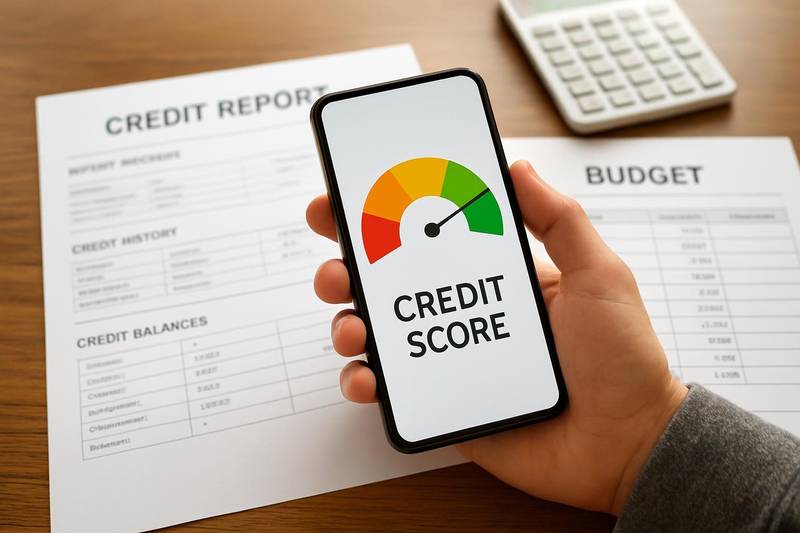
Credit Score: What Lenders Want to See
Your credit score is a quick summary of how you’ve handled borrowed money. Lenders use it to decide whether to approve you and what interest rate to offer. If you’re not sure where you stand, our guide on what counts as a good credit score can help.
As a rough, estimated guide (lenders differ):
- Excellent (around 740+): Best chance at the lowest advertised rates.
- Good (around 670 to 739): Often qualifies for competitive offers.
- Fair (around 580 to 669): May qualify, usually at higher rates.
- Poor (below about 580): Options narrow and costs rise; see our guide to personal loans for bad credit and what to avoid.
Lenders also look beyond the number: recent late payments, high card utilization, collections, and how many accounts you’ve opened recently all matter. If your score is the obstacle, review what actually moves the needle when raising your credit score.
Pro tip: Check your credit reports for free at AnnualCreditReport.com before applying. Errors can drag your score down, and disputing them costs nothing.
A credit score opens the door, but your debt-to-income ratio often decides whether you walk through it.
Debt-to-Income Ratio and Income Verification
DTI measures how much of your gross monthly income already goes to debt payments. Lenders use it to judge whether you can handle another payment.
How to calculate your DTI
- Add up monthly debt payments: rent or mortgage, auto loans, student loans, minimum card payments, and other loans.
- Divide that total by your gross (pre-tax) monthly income.
- Multiply by 100 to get a percentage.
For example, $1,800 in monthly debts on $5,000 of gross monthly income is a 36% DTI. Many lenders prefer DTI at or below roughly 36% to 40%, though some approve higher ratios, especially if the new loan will replace existing debt (these figures are estimates).
What income documents to expect
- Recent pay stubs (often the last 30 days)
- W-2s or 1099s from the past one to two years
- Federal tax returns, especially if you’re self-employed
- Bank statements showing deposits
- Proof of other income, such as Social Security, pension, or disability benefits
Income doesn’t have to come from a traditional job. Many lenders accept retirement income, benefits, and documented self-employment earnings.

Employment History and Stability
Lenders want confidence that your income will continue through the life of the loan. That doesn’t mean you need decades at one employer.
- Traditional employees: Lenders may verify your employer and how long you’ve worked there.
- Recent job changes: A move within the same field is usually viewed more favorably than a gap in income.
- Self-employed or gig workers: Expect to provide one to two years of tax returns and bank statements to show consistent earnings.
- Retirees: Pension, Social Security, and retirement account distributions can count as income.
If you’re between jobs, borrowing may be risky even if you could qualify. Consider whether a payment you can’t comfortably afford could deepen your debt problem. Our guide to debt relief options when you’re unemployed covers alternatives.
Collateral: Secured vs. Unsecured Personal Loans
Most personal loans are unsecured, meaning you don’t pledge an asset. Some lenders offer secured personal loans backed by something you own.
- Unsecured loans: No collateral, but approval and rates lean heavily on credit and income.
- Secured loans: Backed by assets such as a savings account, certificate of deposit, or vehicle. They may offer lower rates or easier approval, but you risk losing the asset if you stop paying.
If you’re thinking about borrowing against your home, that’s a different product with different risks. See our upcoming guide on a home equity loan to pay off debt before deciding.
Pledging collateral can lower your rate, but it puts the thing you pledged on the line if you fall behind.
How to Improve Your Odds of Approval
If you’re not quite where you’d like to be, a few weeks or months of preparation can change your offers.
- Pay down credit card balances. Lower utilization can lift your score and lower your DTI.
- Make every payment on time. Payment history is a major scoring factor.
- Dispute credit report errors. Use our guide to disputing errors on your credit report.
- Avoid new credit applications in the months before you apply.
- Pre-qualify with several lenders. Soft-pull pre-qualification lets you compare estimated rates without a hard inquiry.
- Consider a co-signer or co-borrower with stronger credit, understanding they share legal responsibility for the loan.
- Request only what you need. A smaller loan amount is easier to qualify for and cheaper overall.
Costs to Compare Before You Sign
Qualifying is only half the question. The loan also has to make financial sense.
- APR: The total yearly cost including interest and fees. Personal loan APRs can range widely, from single digits to well above 30% depending on credit (estimate).
- Origination fees: Often around 1% to 10% of the loan amount, sometimes deducted from your proceeds (estimate).
- Prepayment penalties: Some lenders charge them; many don’t.
- Late fees: Check what happens if you miss a payment.
If you’re borrowing to pay off cards, run the numbers first with our debt payoff calculator, and read using a personal loan for debt consolidation for the pros, cons, and how to qualify. It’s also worth comparing against a balance transfer card, which can cost less for some borrowers.
A loan isn’t the right answer for everyone. If approval looks unlikely or payments would strain your budget, explore the broader debt relief options or review our debt consolidation and loans guide. To talk through your own numbers, request a free consultation about personal loan options with the form on this page.
Frequently Asked Questions
What is the minimum credit score for a personal loan?
There is no universal minimum. Some lenders look for scores in the mid-600s or higher, while others serve borrowers with lower scores at higher rates. Because requirements vary, pre-qualifying with a few lenders is the best way to see where you stand.
Do I need a job to get a personal loan?
Not necessarily, but you do need verifiable income. Lenders may accept retirement income, Social Security, disability benefits, or self-employment earnings if you can document them.
Does applying for a personal loan hurt my credit?
Pre-qualification typically uses a soft inquiry that doesn’t affect your score. A formal application usually triggers a hard inquiry, which can cause a small, temporary dip. Learn more in our article on whether debt consolidation hurts your credit score.
Can I get a personal loan with a high DTI?
Possibly, but options shrink and rates may rise as DTI climbs. Paying down existing balances, adding income, or applying with a co-signer can help. For a structured way to manage payments, see our overview of budgeting to get out of debt.
This article is for general education only and is not financial, legal, or credit advice. Rates, fees, and requirements are estimates and vary by lender and by borrower. Consider speaking with a qualified financial professional or nonprofit credit counselor about your situation.
Get a free personal loan and debt options consultation
A debt specialist will review your situation and loan options with you, free and with no pressure.